


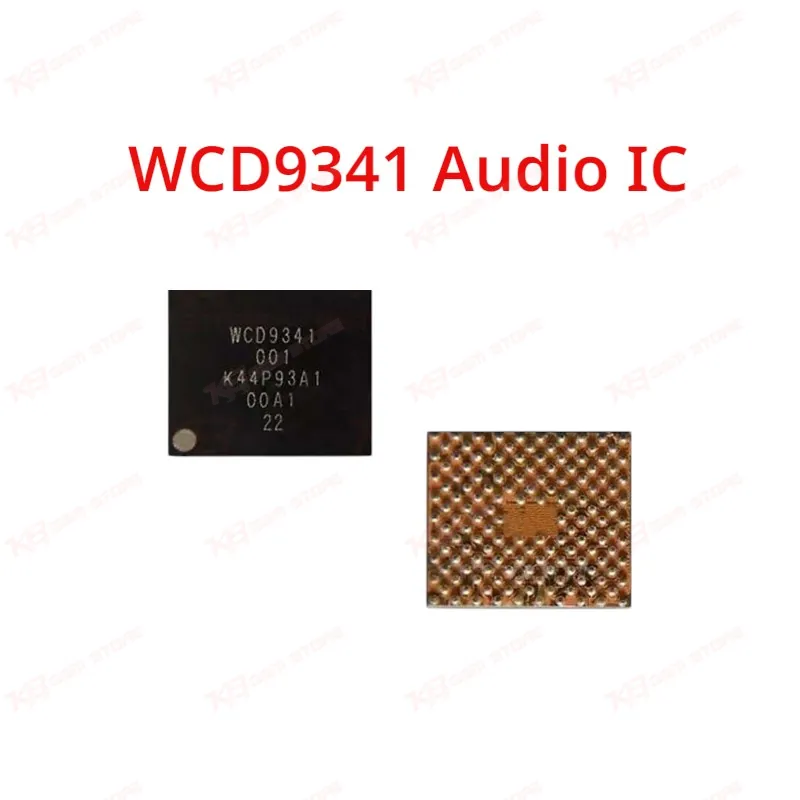
WCD9341 Audio IC
WCD9341 Audio IC
Regular price
Rs.300.00 PKR
Regular price
Sale price
Rs.300.00 PKR
Shipping calculated at checkout.
Quantity
Couldn't load pickup availability
The WCD9341 is Qualcomm's standalone Hi-Fi audio codec IC used in Samsung Galaxy Note 8, S8, and S8+ boards. If a phone comes in with no sound, mic not working, or earpiece issue after a fall or water damage, this IC is usually the fault. It handles playback, recording, headset detection, and earpiece output on the board. You get a direct chip-level replacement for board-level audio repair — no guesswork, just swap and test on your reballing station.
⚖️ Weight: 0.01 kg
SKU:MST-IC-247
- Safe & Secure Payment
- Fast Delivery
- WhatsApp Support


Description
FAQ
What is the product name?
The product is the WCD9341 Audio Codec IC.
What is the brand of this product?
The brand is Qualcomm.
What is the model of this product?
The model is WCD9341.
What is this product used for?
It's used to repair no-sound, mic, and earpiece faults on Samsung Note 8, S8, and S8+ boards.
Which devices are compatible with this product?
It's compatible with Samsung Galaxy Note 8, Galaxy S8, and Galaxy S8+.
Who should use this product?
This IC is meant for mobile repair technicians, GSM hardware engineers, and repair shops doing board-level rework.
Does the WCD9341 support both mic and earpiece functions on the same chip?
Yes, it handles mic capture, MBHC headset detection, and Class-H earpiece output within one codec IC.
Can this IC fix a "no sound after water damage" board on a Note 8?
In most cases yes, since this IC sits near the charging port and is a common failure point after liquid exposure, but board-level diagnosis should confirm it before replacement.