


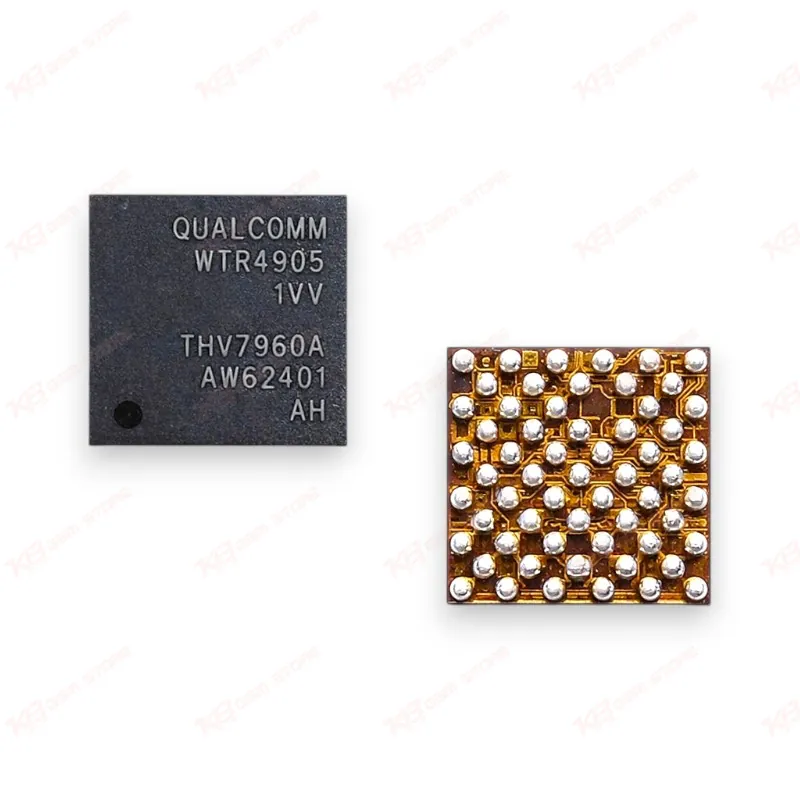
WTR4905 1VV Audio IC
WTR4905 1VV Audio IC
Regular price
Rs.400.00 PKR
Regular price
Sale price
Rs.400.00 PKR
Shipping calculated at checkout.
Quantity
Couldn't load pickup availability
The WTR4905-1VV is a genuine Qualcomm RF transceiver IC used as the network chip in a wide range of Android smartphones. Technicians reach for this IC when a phone shows persistent network issue, signal drop, or complete network loss that survives a software flash. It handles baseband-to-antenna signal conversion, so a faulty unit typically shows up as no service, weak signal, or IMEI-related network faults. Built for direct board-level replacement on supported models, this IC suits repair shops and service centers doing regular IC-level board work. Genuine part, tested before dispatch, ready for reballing and reflow on your repair bench.
⚖️ Weight: 0.01 kg
SKU:MST-IC-88
- Safe & Secure Payment
- Fast Delivery
- WhatsApp Support


Description
FAQ
What is the product name?
The product name is WTR4905-1VV Qualcomm Network IC.
What is the brand of this product?
The brand of this product is Qualcomm.
What is the model of this product?
The model of this product is WTR4905-1VV.
What is this product used for?
This IC is used to repair network and signal faults at the board level on supported Android phones.
Which devices are compatible with this product?
It's compatible with select Oppo, Vivo, Xiaomi, Huawei/Honor, and Motorola models — see the Compatible Devices list above for exact models.
Who should use this product?
This product is suitable for mobile repair technicians, repair shops, service centers, and professional users.
Does this IC fix "no network" or "dead network" issues after a software flash didn't work?
Yes — if the fault survives a clean flash and isolates to the RF stage, this IC is the standard hardware fix for that symptom.
Can this IC be reballed and reflowed with a standard hot air rework station?
Yes, it's a fine-pitch package suited to normal hot air reballing and reflow work with proper pad cleaning and alignment.